SEA LIFE London Underwater Experience
Interactive Kinect Green Screen Experience
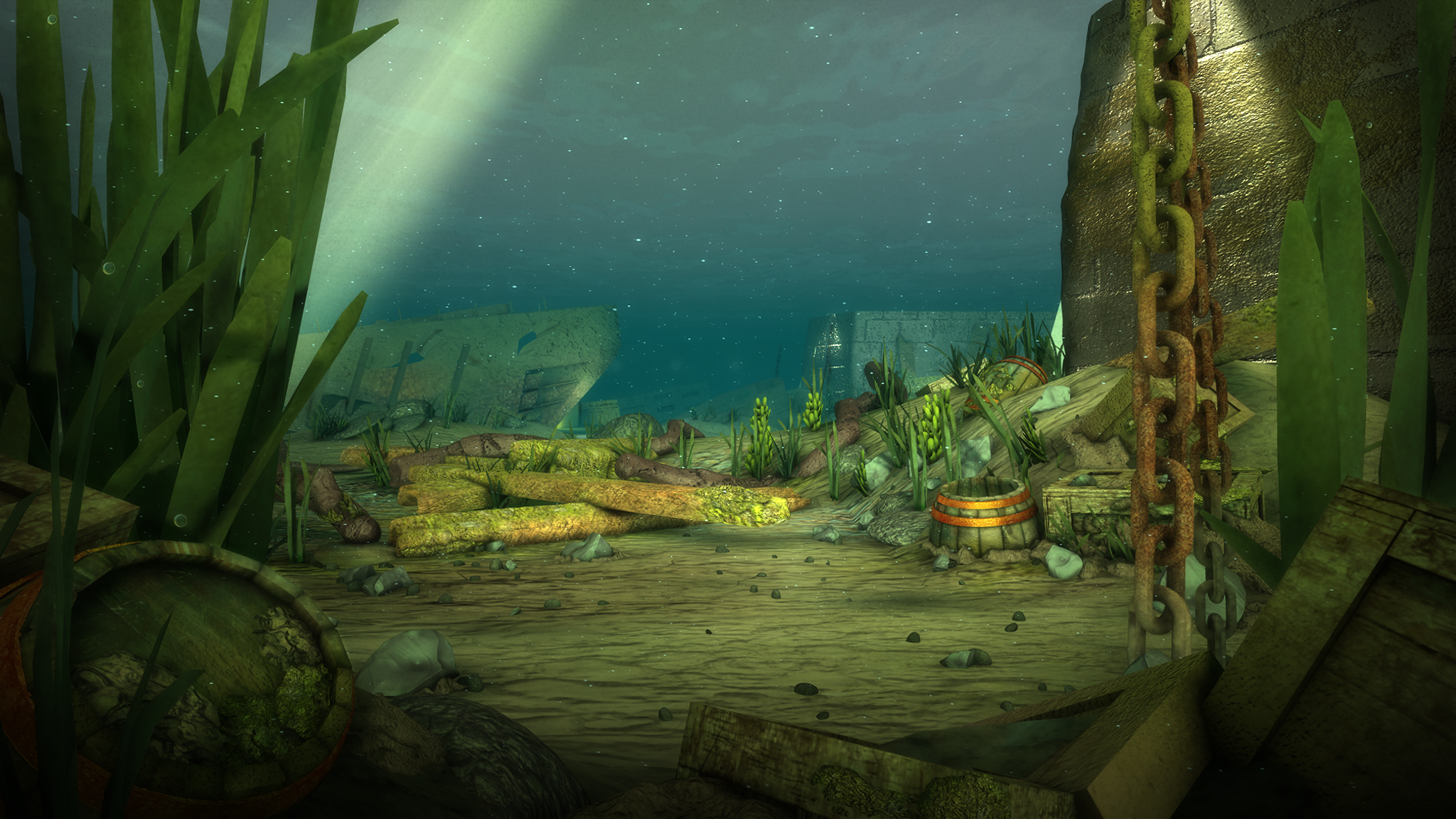
The SEA LIFE London underwater experience was an interactive installation that allowed groups of up to four guests to take a digital journey beneath the River Thames.
Guests began by digitally putting on diving helmets before being dropped underwater, where they could explore the environment and interact with creatures including fish, seahorses and seals.
The experience used Kinect tracking and real-time green screen removal to place guests inside the underwater scene. As they moved around, digital diving helmets stayed locked to their heads, helping make the whole thing feel playful and immediate.
My Role
Unity Developer
I worked as the Unity Developer on the project, focusing on the Kinect implementation, real-time green screen system and interactive creature behaviour.
My work included using Kinect skeletal tracking to follow guests’ body positions, keeping the diving helmets aligned correctly, and helping composite the live camera feed into the Unity scene.
I also worked on the interactive elements, allowing fish and other creatures to respond to tracked body parts. To make the underwater world feel more alive, I built a bespoke fish animation system so the fish could move in a more natural way rather than relying only on canned animation loops.
Technical Challenges
The main challenge was bringing together live camera input, green screen keying, Kinect tracking and Unity rendering in a way that felt seamless to the guests.
Because this was a public attraction, the experience also had to be robust. People would move unpredictably, stand in the wrong place, wave their arms around and generally use it in ways you could not fully control. The tracking and interactions had to handle that as gracefully as possible.
Another important part was making the scene feel alive without becoming chaotic. The creatures needed to react to guests in a fun, readable way, while still feeling like they belonged in the underwater environment.
Key Contributions
Unity developer on the interactive underwater experience.
Implemented Kinect skeletal tracking for guest interaction.
Worked on a bespoke real-time green screen solution.
Locked digital diving helmets to tracked head positions.
Built interactive creature behaviours using tracked body parts.
Created a custom fish animation system for more natural movement.
Helped ensure the installation ran reliably in a live public environment.
Technologies
Unity, C#, Kinect, skeletal tracking, real-time green screen, camera compositing, interactive installation, custom animation systems, procedural fish movement, performance optimisation.
Outcome
The final experience gave SEA LIFE London guests a fun way to step into the River Thames and interact with its underwater world.
For me, it was a great example of using Unity beyond traditional games, combining body tracking, camera input, green screen compositing and real-time interaction into a public-facing experience that needed to be both playful and reliable.